
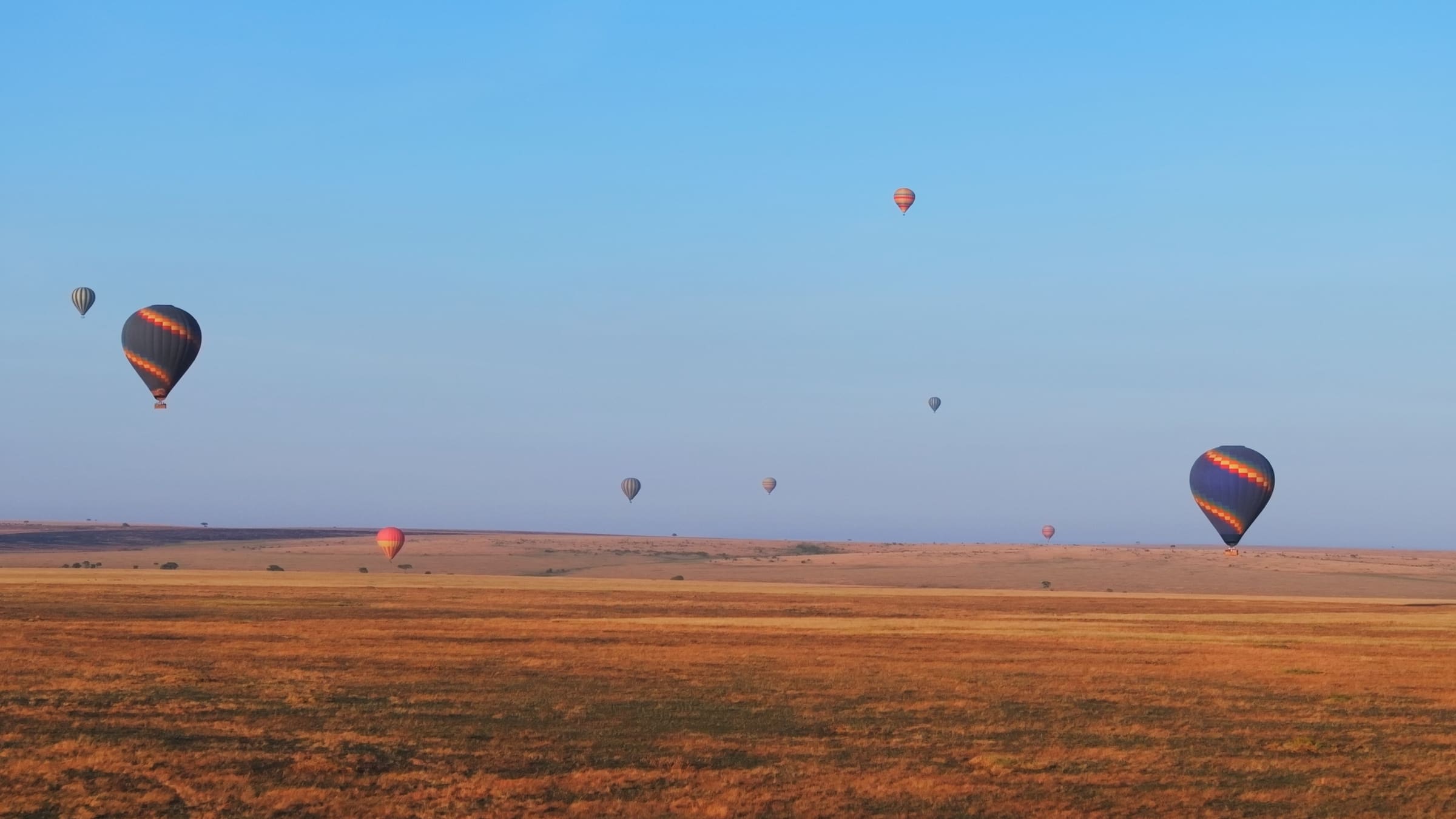
Wilderness
Masai Mara Diaries
Long-form documentation of wildlife, landscapes and Maasai culture in one of Africa's great living ecosystems.
Story
The Masai Mara is usually filmed for its spectacle — the river crossings, the big cats, the great migration. The Diaries set out to do something slower and more complete: to document not only the wildlife but the people who have shared this land for generations, and the relationship between the two.
This is long-form work by design. Rather than a single visit chasing a single sequence, the project returns across seasons, building a record of how the grassland changes, how the herds move, and how Maasai life adapts around both. It is a diary in the truest sense — accumulated, dated, unhurried.
Historical Context
The Maasai are among the most recognised peoples in the world, and among the most misrepresented. Behind the photograph of a man in a red shúkà lies a sophisticated pastoral society with its own systems of age-sets, governance, ecological knowledge and oral law. The Mara itself is not a wilderness in the sense of an untouched place; it is a landscape shaped for centuries by grazing, fire and human decision.
Documenting it honestly means resisting the temptation to separate the wildlife from the people. Conservation here is not a story of nature versus humanity but of a long, complicated coexistence now under pressure from fences, tourism, climate and land-use change.
The Landscape
Open grassland gives way to riverine forest along the Mara and Talek rivers; escarpments rise at the western edge. The project maps the locations it documents — grazing grounds, crossing points, settlements — so that the footage is anchored to place, and so that change over time can be measured rather than merely felt.
Field Notes
The most affecting material has come from the elders. One spoke of a Mara that existed before the fences, when herds darkened the plain and a boy could walk a day without meeting a road. Another, a beadwork artist, explained that the colours she threads are not ornament but a language — red for bravery and unity, white for peace, blue for the sky and the rains it brings.
These are the threads the Diaries are made of: the literacy behind the beadwork, the names of grazing grounds now under crops, the songs of an age-set's initiation. Each is recorded in the speaker's own language, with translation, and added to the archive.
Photo Gallery
Field plates
Short Film
In production
The film for this project is being edited
References
- Maasai Mara National Reserve — ecological survey literature.
- Oral-history interviews with Maasai elders, VIDFLIX archive, 2026.
- Spear, Thomas & Waller, Richard (eds). Being Maasai (1993).
Credits
- Directed & documented by Shaswat Ghosal
- Community liaison: Maasai elders & guides
- Part of the VIDFLIX Living Archive